Busan Subway Fare, City Buses and Gimhae Airport: What Each Ride Costs
A Busan subway ride costs $1.19 (1,600 won) on a transit card, or $1.34 (1,800 won) for a longer trip. From Gimhae Airport, the light rail and subway together start at the same 1,600 won, against 6,000 to 9,500 won for the limousine bus.
Prices checked November 4, 2026 · in Seoul, on screen
A Busan subway ride costs $1.19 (1,600 won) on a transit card for a 1-zone trip, and $1.34 (1,800 won) for a 2-zone trip. A regular city bus is $1.15 (1,550 won) by card. From Gimhae Airport, the light rail plus subway into the city costs the same 1,600 to 1,800 won in total, because the transfer is free. The airport limousine buses charge $4.46 (6,000 won) to Seomyeon and $7.07 (9,500 won) to Haeundae.
I live in Seoul, and Busan is where Seoul people go for the beach, the fish market and a change of air. The transit works on the same logic as Seoul’s, with one card for everything. The fares and the zone rules differ, though. This guide gives you the published numbers, so you can price a day of things to do in Busan before you land.
Checked online on November 4, 2026 (Checked: 2026-11-04). Subway fares come from Busan Transportation Corporation’s fare page and transfer rules from its transfer fare page. Light rail fares come from the Busan-Gimhae Light Rail fare table. Airport bus and taxi figures come from Gimhae Airport’s own bus listing and taxi page. This is a guide to published prices checked on screen, not a ride log or a receipt. Dollar figures use $1 = 1,344.59 won (ECB reference rate for November 3, 2026, via Frankfurter). They are approximate conversions, not a card or cash-exchange quote.

The short version
| Ride | Adult fare | In dollars | Note |
|---|---|---|---|
| Subway, 1 zone, transit card | 1,600 won | $1.19 | Same fare on the mobile app |
| Subway, 2 zones, transit card | 1,800 won | $1.34 | Longer trips |
| Subway, 1 zone, QR paper ticket | 1,700 won | $1.26 | Bought at the station machine |
| City bus, transit card | 1,550 won | $1.15 | Regular routes |
| City bus, cash | 1,700 won | $1.26 | Airport route 307, per the airport |
| Express city bus, transit card | 2,100 won | $1.56 | Airport route 3003 |
| Airport limousine to Seomyeon | 6,000 won | $4.46 | Card only |
| Airport limousine to Haeundae | 9,500 won | $7.07 | Card only |
Most visitors will spend between 1,550 and 1,800 won per ride and almost never more. The two exceptions are the limousine buses and taxis.
Busan subway fares: two zones, one card
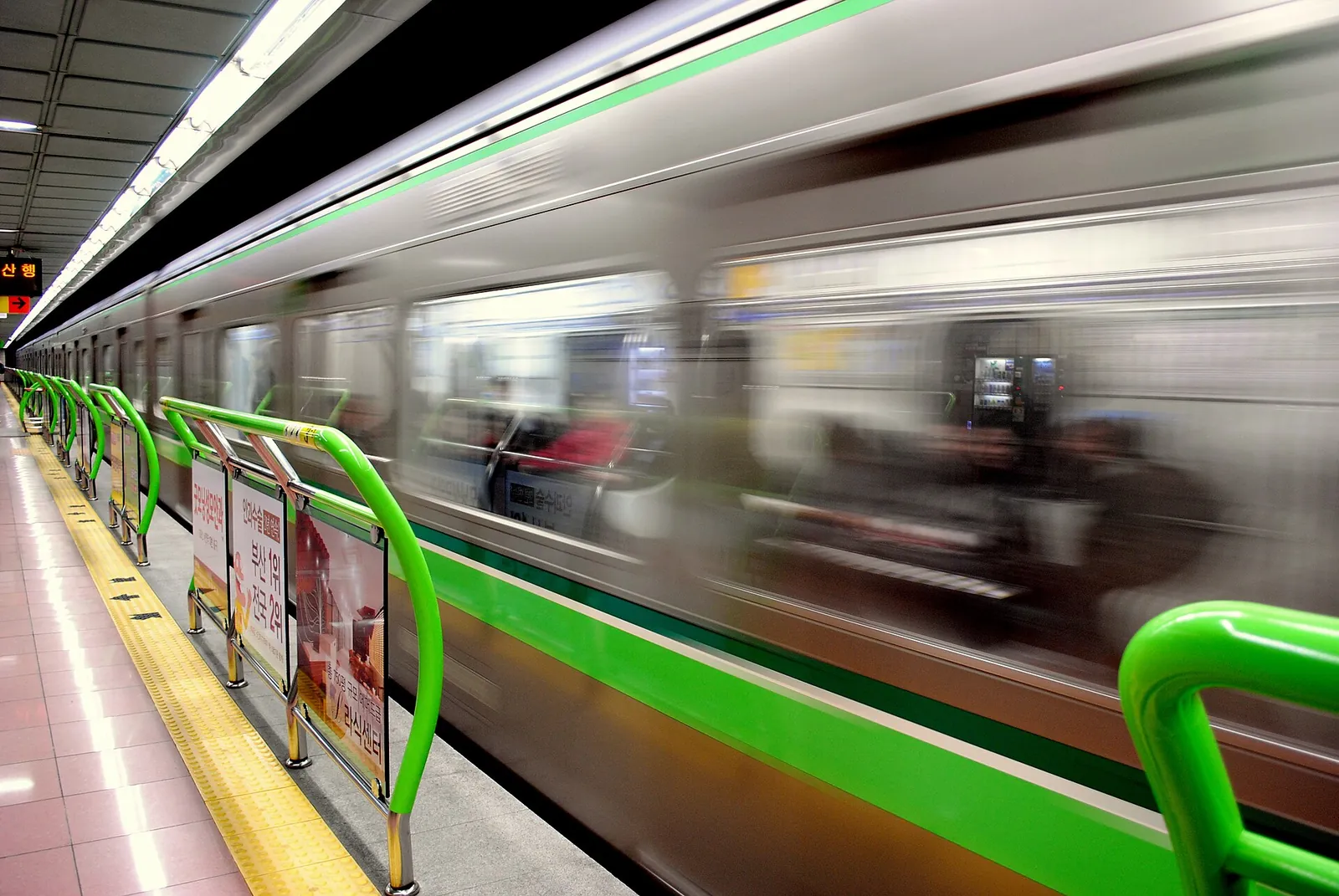
Busan’s subway is run by Busan Transportation Corporation (부산교통공사), which calls itself Humetro. It has four lines. Lines 1 and 2 are the ones visitors use most: Line 1 runs north–south through Busan Station and Nampo, and Line 2 runs east–west through Seomyeon to Haeundae.
Busan charges by zone, not by kilometer the way Seoul does. There are only two fare levels, called 1구간 (zone 1) and 2구간 (zone 2). A short trip is zone 1, and a longer one is zone 2. The operator’s fare page lists these adult fares:
| Ticket | 1 zone | 2 zones |
|---|---|---|
| Transit card or mobile app | 1,600 won ($1.19) | 1,800 won ($1.34) |
| QR paper ticket | 1,700 won ($1.26) | 1,900 won ($1.41) |
The paper ticket costs 100 won more on every ride. That’s small, but you also queue at a machine each time. A transit card skips both.
The same page says children aged 6 to 12 ride free with a transit card. With a QR ticket, the child fare is 700 won for 1 zone.
Which stations fall into which zone is set out in a distance table. The operator publishes it only as a downloadable HWP or PDF file, not as text on the page. So for any given trip, plan on 1,600 won and expect 1,800 won on longer ones. The gate screen shows the fare charged each time you tap in or out.
The day pass: only in the app, and only for the subway
The subway sells passes, but only through its mobile app, 부산도시철도 (Busan Metro). The ticket guide says foreigners can use the app as a non-member with an email address and a verification code. The fare page lists these adult prices:
- 1-day pass: 6,000 won ($4.46), unlimited subway rides on the first day you use it.
- 3-day pass: 13,000 won ($9.67), unlimited for three days from the first gate entry.
Do the math before you buy. Four 1-zone rides on a card cost 6,400 won ($4.76), so the 1-day pass only saves money from the fourth ride on. The catch is in the fine print: the passes do not work on buses, the Donghae Line (동해선) or the Busan-Gimhae Light Rail. That rules out the airport leg and any bus to the beach. A day that mixes bus and subway is usually cheaper on a plain transit card with free transfers.
Busan city bus fares
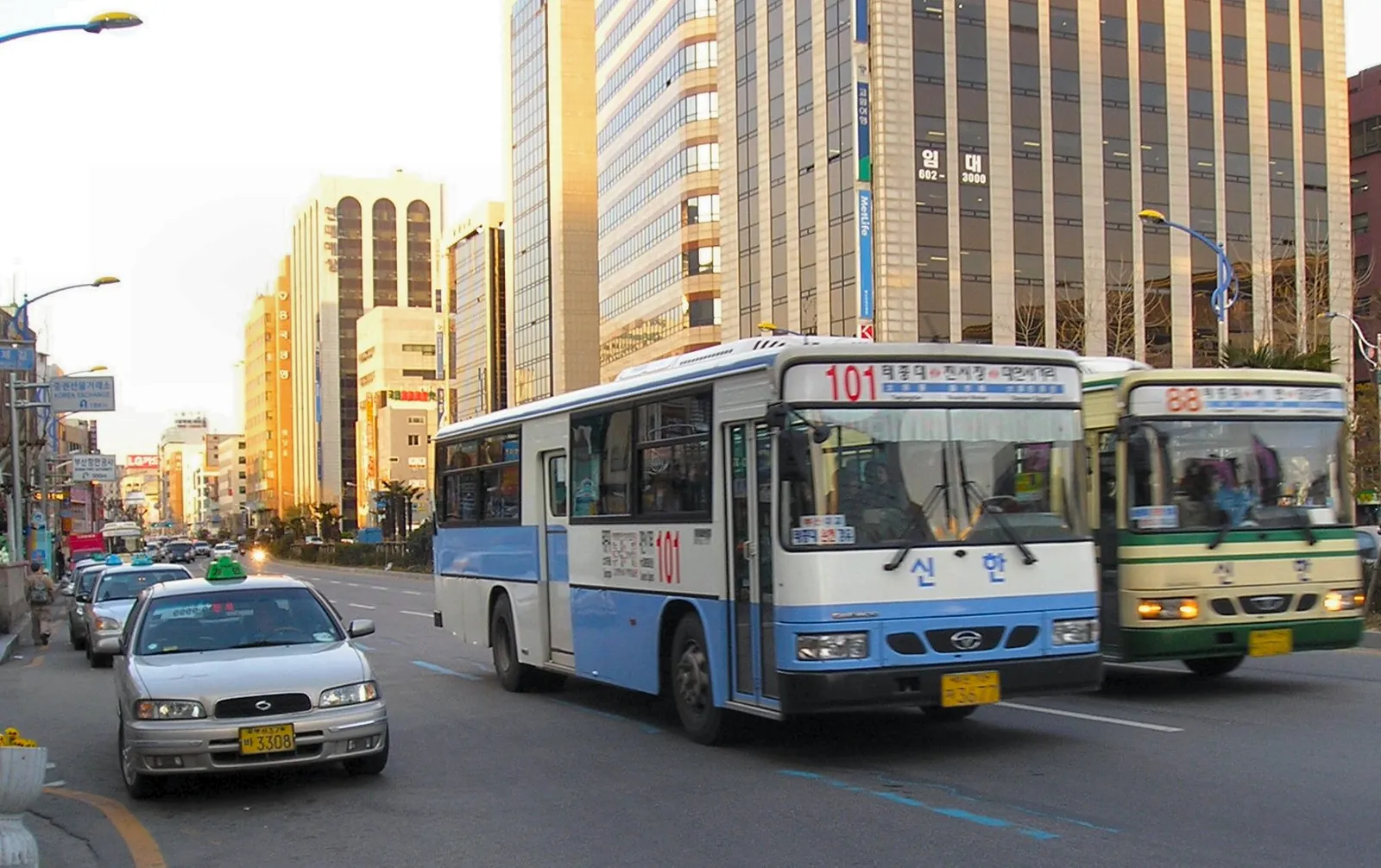
Regular Busan city buses charge 1,550 won ($1.15) with a transit card. That figure appears in the subway operator’s transfer table, and the airport lists the same card fare for its city bus routes. Gimhae Airport gives the cash fare on route 307 as 1,700 won ($1.26).
Seat buses (좌석버스) and express city buses (급행버스) cost more. The transfer table puts a subway-plus-seat-bus trip at 2,100 won in total. The airport lists express route 3003 at 2,100 won ($1.56) by card and 2,200 won ($1.64) in cash.
One rule matters if you’re arriving with bags. The airport’s note on route 307 quotes the city bus terms: each passenger may bring only a cabin-size bag on a city bus. The limit is 20 kg and 50 × 40 × 20 cm. A large checked suitcase is outside that rule, so take the light rail or a limousine instead.

Transfers: when the second ride is free
Busan, Gimhae and Yangsan share one transfer system. The transfer page sets out the rules:
- Window: board the next vehicle within 30 minutes of leaving the first one.
- Limit: up to two transfers, so three different vehicles in one trip.
- Same mode twice doesn’t count. Two rail lines in a row (for example, Line 2 to the Donghae Line to Line 1) or the same bus number twice gets no discount.
- What you pay: the highest fare among the vehicles you used.
In practice:
| Trip | First ride | Second ride | Total |
|---|---|---|---|
| Subway (1 zone), then city bus | 1,600 won | 0 won | 1,600 won ($1.19) |
| City bus, then subway (1 zone) | 1,550 won | 50 won | 1,600 won ($1.19) |
| Subway (1 zone), then seat bus | 1,600 won | 500 won | 2,100 won ($1.56) |
| Light rail, then subway (1 zone) | 1,600 won | 0 won | 1,600 won ($1.19) |
If the subway leg is 2 zones, add 200 won ($0.15). The page also notes that since September 19, 2025, the extra Busan–Gimhae–Yangsan transfer fee is gone. It used to add 500 won ($0.37) for an adult on trips that mixed Busan transit with Gimhae or Yangsan buses or the light rail.
Tap your card on the reader when you get off a bus, too. The 30-minute window starts when you leave the first vehicle, and the system needs that tap to know when that was.
Gimhae Airport to Busan: four ways, priced
Gimhae International Airport (김해국제공항) sits west of the city, across the Nakdong River. Here is what each option costs to the two places most visitors are headed, Seomyeon and Haeundae.
| Option | Adult fare | In dollars | Good for |
|---|---|---|---|
| Light rail + subway, transit card | 1,600–1,800 won | $1.19–$1.34 | Almost everyone |
| City bus 307 to Haeundae, card | 1,550 won | $1.15 | Light bags, no rush |
| Limousine to Seomyeon/Bujeon | 6,000 won | $4.46 | Big bags, Seomyeon hotels |
| Limousine to Haeundae/Gijang | 9,500 won | $7.07 | Big bags, Haeundae hotels |
| Taxi to Seomyeon (airport estimate) | 18,000 won | $13.39 | Groups, late nights |
| Taxi to Haeundae (airport estimate) | 25,000 won | $18.59 | Groups, late nights |
Light rail and subway: the cheap way
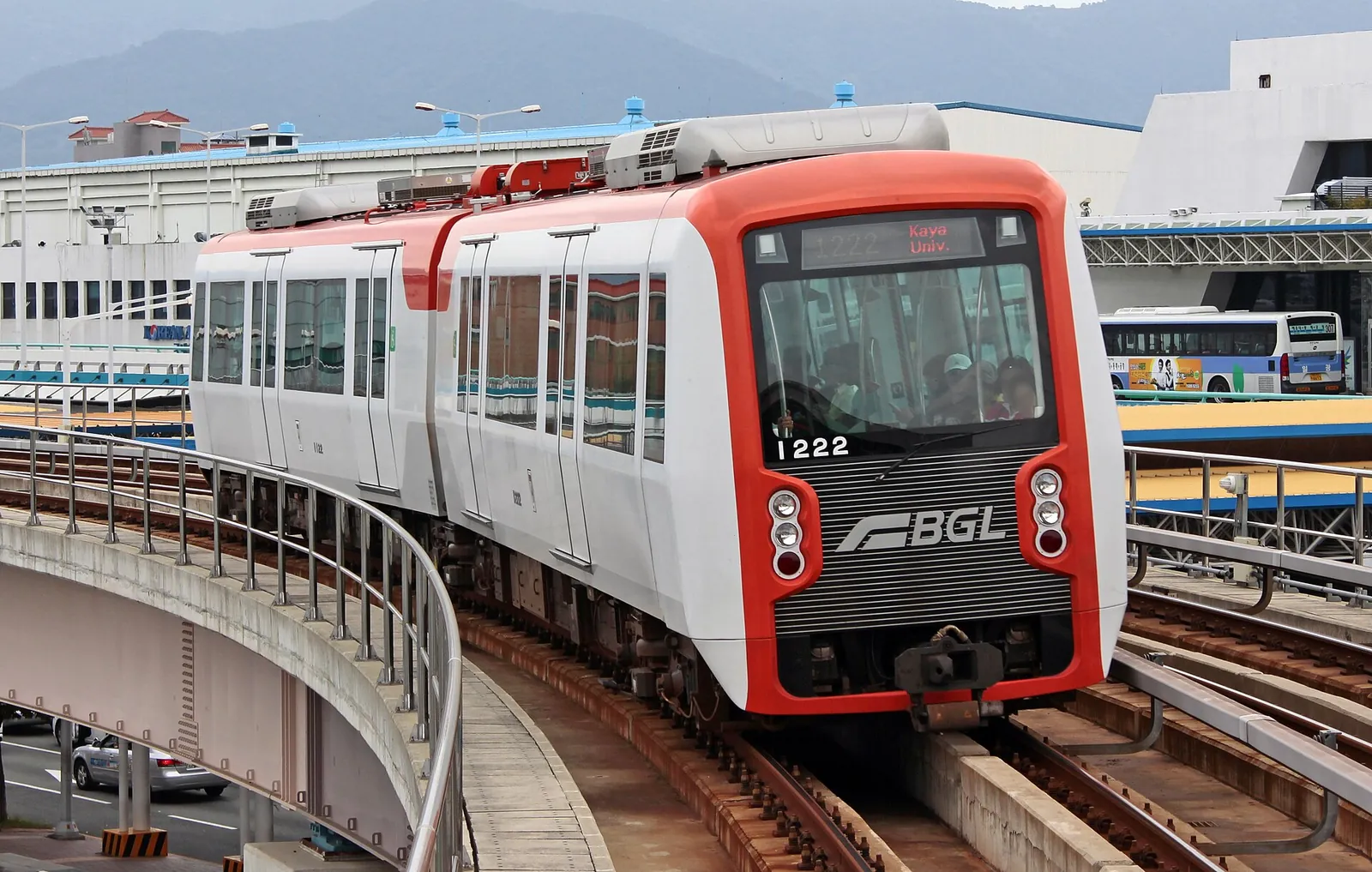

The Busan-Gimhae Light Rail (부산김해경전철) stops at the airport. The airport’s own subway page points you to two transfers: Sasang for Line 2 and Daejeo for Line 3. For Seomyeon or Haeundae, ride east to Sasang and change to Line 2.
The light rail fare table lists 1,600 won for 1 zone and 1,800 won for 2 zones by transit card. A single-use ticket is 1,700 or 1,900 won. The airport sits in the operator’s “outer zone 2,” which runs from Daejeo to Sasang. So the hop to Sasang should be a 1-zone trip.
Then the transfer rule takes over. You pay the higher of the two fares, and the second ride is free within 30 minutes. With a card, the whole trip from the terminal to Seomyeon or Haeundae comes to 1,600 won, or 1,800 won if the subway leg is 2 zones.
Use a transit card for this, not paper tickets. Paper tickets don’t carry the transfer, and the subway’s app day pass doesn’t cover the light rail.
Limousine buses: more money, fewer stairs
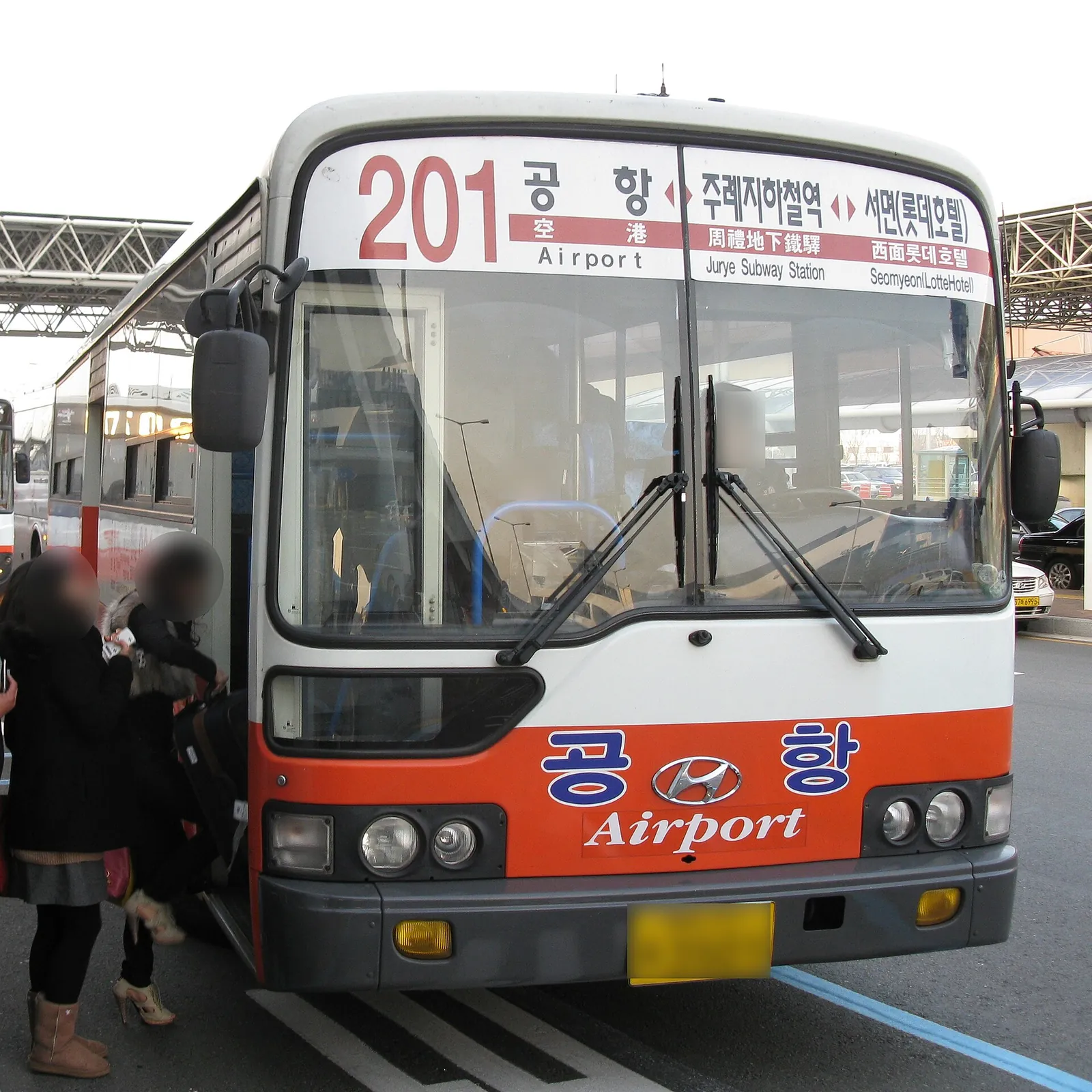
The airport lists two limousine routes (리무진 버스) from stop 3 on the first floor of both terminals. Neither takes cash.
- Seomyeon/Bujeon (서면/부전): 6,000 won ($4.46). Stops include Jurye, Dongeui University, Seomyeon and Bujeon Market. The listed departures from the international terminal run from 07:20 to 21:30, about every 70 to 80 minutes.
- Haeundae/Gijang (해운대/기장): 9,500 won ($7.07). It stops at Namcheon, Shinsegae Centum City, BEXCO, Haeundae Beach and Jangsan Station. Some trips continue to the Gijang resorts. Departures run from 07:10 to 21:40.
Both are a fair choice if you have a large suitcase and your hotel is near a stop. The Seomyeon bus leaves less than once an hour, so check the time before you queue.
City bus 307: cheap, slow, and bags must be small
Route 307 runs from the domestic terminal to Haeundae and on to Songjeong for the regular 1,550-won card fare. The airport lists buses about every 25 minutes, from 05:15 to 23:20. Its route winds through Gupo, Dongnae and Centum City, so it is long. Remember the cabin-bag limit above.
Express route 3003, toward Taejongdae, leaves from stop 2. It costs 2,100 won ($1.56) by card, with departures listed from 05:00 to 21:30.

Taxi: what the airport says to expect
The airport’s taxi page gives a regular taxi’s base fare as 4,800 won ($3.57) for the first 2 km. It also publishes its own estimates for regular taxis:
| To | Time | Estimated fare |
|---|---|---|
| Seomyeon (Lotte Hotel) | about 45 min | 18,000 won ($13.39) |
| Nampo-dong (Jagalchi Market) | about 60 min | 20,000 won ($14.87) |
| Haeundae (Paradise Hotel) | about 70 min | 25,000 won ($18.59) |
| Gwangalli | about 70 min | 25,000 won ($18.59) |
| Taejongdae | about 80 min | 28,000 won ($20.82) |
The page says these change with traffic. Late at night, the meter runs higher: 20% from 11 p.m. to midnight, 30% from midnight to 2 a.m., and 20% from 2 to 4 a.m. For three or four people with bags, a taxi to Seomyeon costs about the same per head as limousine tickets, or less. For one person, the train is about a tenth of the price.
If you know Seoul’s taxis, the same habits apply here. Our Seoul taxi guide covers how meters, surcharges and payment work.
Which card to use
You need a prepaid transit card (교통카드). Korea’s major cards work across cities, so a T-money (티머니) card bought in Seoul generally works on Busan’s subway and buses. The light rail operator lists T-money, Cashbee, Mybi and Hanaro cards for its transfer discount. Busan’s subway operator mentions Mybi and Cashbee among others.
If you’re arriving in Busan first, buy a card at a station card machine or a convenience store. The subway’s ticket guide says both sell them, and that cards are topped up at station machines. One quirk: the subway doesn’t refund card balances. The guide says to ask at a convenience store such as 7-Eleven, CU or GS25 instead. For what else those shops charge, see our convenience store price guide.
If you’re coming from Incheon instead, the Incheon Airport to Seoul guide explains the same card at the start of a Seoul trip.
What I couldn’t verify
- Which Busan subway trips are zone 2. The operator publishes the station zone table only as a downloadable file, not on the page. I can’t tell you the fare for a specific station pair.
- Whether Airport to Sasang is always 1 zone on the light rail. The table defines zones and zone pairs, but doesn’t spell out a trip inside one zone. My reading is 1 zone, and the 1,600-won total depends on it.
- The date of the airport’s taxi estimates. The page doesn’t say when they were written. Treat them as a rough guide, and check the meter.
- Limousine travel times and luggage rules. The airport lists stops and departures, but not how long the ride takes or whether large bags are limited.
- Route 3003’s full stop list and route 307’s travel time. The airport gives fares and hours, but not these.
- T-money acceptance on every Busan bus and the subway. This is the general rule across Korea, and the light rail names T-money. The subway’s page lists other card brands and doesn’t name T-money.
Related guides
Common questions
How much is the Busan subway fare?
An adult pays 1,600 won (about $1.19) for a 1-zone trip and 1,800 won ($1.34) for a 2-zone trip with a transit card or the mobile app. A QR paper ticket from the station machine costs 1,700 won or 1,900 won. These are Busan Transportation Corporation's published fares, checked November 4, 2026.
What is the cheapest way from Gimhae Airport to Busan city?
The Busan-Gimhae Light Rail from Airport station to Sasang, then subway Line 2. With a transit card the light rail costs 1,600 won, and the transfer to the subway is free within 30 minutes. You pay only the higher of the two fares, so the whole trip is 1,600 or 1,800 won.
How much is the limousine bus from Gimhae Airport?
The airport lists 6,000 won (about $4.46) for the Seomyeon/Bujeon limousine and 9,500 won ($7.07) for the Haeundae/Gijang limousine, adult fare. Both are card only, with no cash accepted.
Is there a Busan subway day pass?
Yes, but only in the Busan Metro mobile app. A 1-day pass costs 6,000 won and a 3-day pass 13,000 won for adults. They cover the subway only, not buses, the Donghae Line or the airport light rail.