Convenience Store Prices in Korea: Eggs, Bread, Ramyeon and More
A tuna-mayo triangle kimbap is $0.89 (1,200 won) at CU, a 10-egg carton is $4.55 (6,100 won), and a sliced loaf is $2.76 (3,700 won). Twenty everyday basics, priced from the chain's own product pages and checked against the government's price survey.
Prices checked October 12, 2026 · in Seoul, on screen
A tuna-mayo triangle kimbap costs $0.89 (1,200 won) at CU, one of the convenience store chains you see on nearly every block in Korea. A carton of 10 eggs is $4.55 (6,100 won), a sliced loaf is $2.76 (3,700 won), and a liter of milk is $2.39 (3,200 won). A full hot lunchbox runs $3.65 to $5.89 (4,900–7,900 won).
Those numbers come straight from CU’s own product pages, one page per item. I also checked a few of them against 참가격 (chamgagyeok), the Korea Consumer Agency’s price portal, to see how far convenience store prices sit above the average retailer.
Checked online on October 12, 2026 (Checked: 2026-10-12). Every price below was read on CU’s official product pages or on 참가격’s weekly price table that day. This is a guide to published prices, not a shopping trip, and not a photographed receipt. Individual stores can differ, and promotions change often. Exchange rate used for every dollar figure: $1 = 1,341.49 won, the ECB reference rate for October 9, 2026, via Frankfurter. Treat dollar figures as approximate; your card or a cash exchange will not give you this exact rate.
The basics, at a glance
I live in Seoul, and a convenience store (편의점, pyeonuijeom) is where most people here grab breakfast, a bottle of water or a late-night snack. Here is what the everyday items cost at CU on the day I checked.
| Item | USD | Won |
|---|---|---|
| Tuna-mayo triangle kimbap (삼각김밥) | $0.89 | 1,200 |
| “Big” tuna-mayo triangle kimbap | $1.27 | 1,700 |
| Shin Ramyun, single pack | $0.75 | 1,000 |
| Shin Ramyun, big cup | $1.19 | 1,600 |
| Hetbahn microwave rice, 210g | $1.79 | 2,400 |
| Eggs, 6 | $3.13 | 4,200 |
| Eggs, 10 | $4.55 | 6,100 |
| Sliced white bread, 10 pieces | $2.76 | 3,700 |
| Seoul Milk white milk, 1 liter | $2.39 | 3,200 |
| Binggrae banana milk, 240ml | $1.34 | 1,800 |
| Jeju Samdasoo water, 500ml | $0.82 | 1,100 |
| Lunchbox (도시락), cheapest checked | $3.65 | 4,900 |
| Lunchbox, priciest checked | $5.89 | 7,900 |
Each item links to its CU page in the sections below. The short version: most snacks and drinks cost under two dollars, breakfast groceries cost two to five dollars each, and a hot lunchbox stays under six.
Eggs: what a carton costs
Eggs get their own section, because their price moved this year.
CU lists a 10-egg carton of teukran (특란) at $4.55 (6,100 won). Teukran is a size grade, one step below the largest eggs. That works out to about $0.45 (610 won) per egg. A smaller 6-egg pack is $3.13 (4,200 won), or about $0.52 (700 won) per egg. As usual, the smaller pack costs more per egg.
If you only want a snack, CU also sells two smoked eggs (훈제란) for $1.94 (2,600 won). Koreans know smoked and roasted eggs as a bathhouse and train-ride snack.
How that compares with the government survey
참가격 publishes a weekly average of actual selling prices, discounts included, for brand-name grocery items. On its main page, a 10-egg carton of CJ’s grade-1 eggs (CJ 1등급 깨끗한 계란) averaged $5.59 (7,500 won), about $0.56 (750 won) per egg.
The same table shows the recent trend for that carton. It averaged $4.77 (6,400 won) every month from April through July, then jumped to $5.59 (7,500 won) in August and stayed there. That is a jump of $0.82 (1,100 won) for the same 10 eggs.
Don’t read the CU-versus-참가격 gap as “convenience stores sell cheaper eggs.” They are different brands, and the 참가격 figure is an average across retailers. What the two numbers do tell you is the range: in October 2026, 10 eggs in Korea cost roughly $4.55 to $5.59, depending on the brand.
Bread and milk
A convenience store will not replace a bakery. Korea has excellent bakeries, but they are a different price conversation. If you want plain toast in your room, though, CU has it.
- Bread: a 10-piece loaf of Samlip sliced white bread (삼립 저온숙성식빵) is $2.76 (3,700 won). Samlip is one of the big packaged-bread brands.
- Milk: Seoul Milk white milk, 1 liter (서울우유), is $2.39 (3,200 won).
- Banana milk: Binggrae banana milk, 240ml (바나나맛우유) is $1.34 (1,800 won). It comes in a squat, jar-shaped bottle, and CU’s page says it has been sold since 1974. The same page lists its raw-milk content as 85.7%.
Ramyeon, rice and the hot-water counter
Every convenience store I know of has a hot-water dispenser and a microwave, and you are free to use both. That changes the math. A dry pack of noodles or a tray of rice becomes a hot meal for no extra charge.
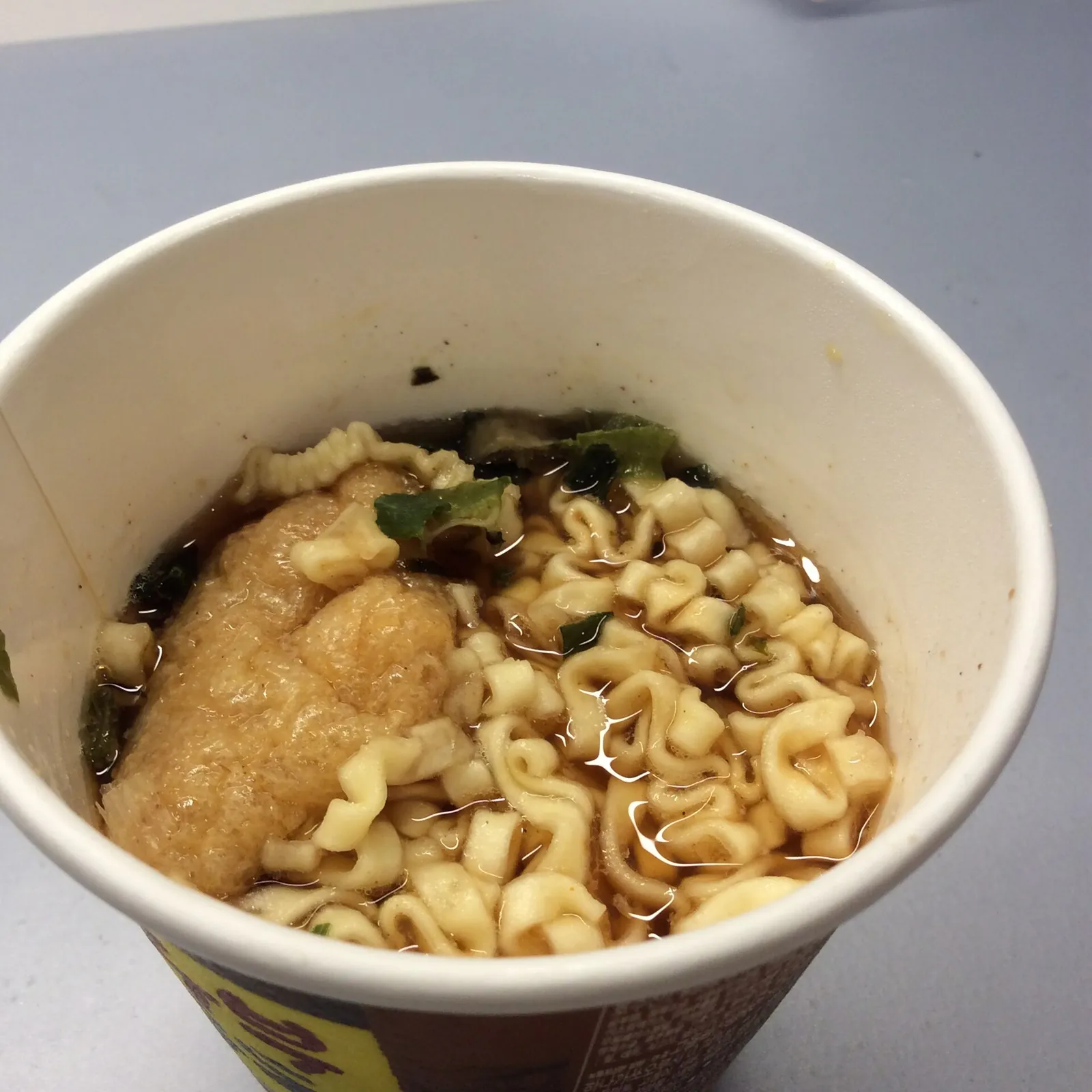

- Shin Ramyun, single pack (신라면): $0.75 (1,000 won). This is the one you cook in a pot at home.
- Shin Ramyun, small cup: $1.01 (1,350 won).
- Shin Ramyun, big cup (큰사발): $1.19 (1,600 won). Fill it at the hot-water machine and eat at the window counter.
- Hetbahn microwave rice, 210g (햇반): $1.79 (2,400 won). Heat it in the store microwave, and it pairs with any cup ramyeon or canned tuna.
Triangle kimbap and lunchboxes

The triangle kimbap (삼각김밥, samgak-gimbap) is the cheapest real food in the store. It is a triangle of seasoned rice and filling, wrapped in seaweed that you peel open in three numbered steps. CU’s regular tuna-mayo triangle is $0.89 (1,200 won). The larger “big triangle” version (빅삼각) of the same flavor is $1.27 (1,700 won).
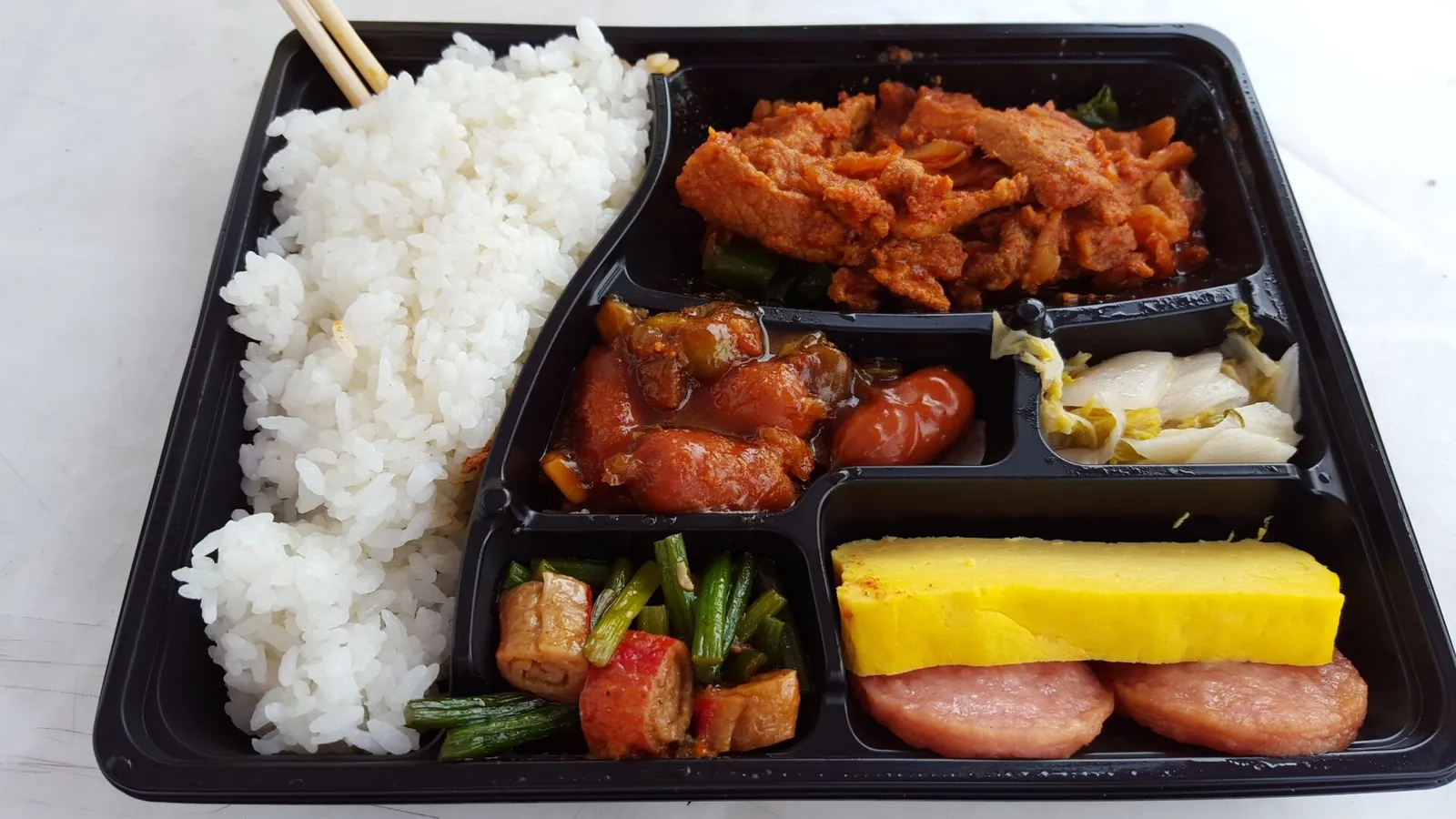
The lunchbox (도시락, dosirak) is the top of the range. CU even named one after its price: the 4,900 Kimchi-Jeyuk Jeongsik is $3.65 (4,900 won) for spicy pork, rolled omelet and rice. The Today’s 9-Side Table (오늘의9첩한상), with chicken galbi, tteok-galbi patties, rolled omelet, sausage and more, is $4.40 (5,900 won). At the top, a mozzarella-stuffed pork cutlet box is $5.89 (7,900 won).
For comparison with a sit-down meal, see food prices in Korea. That guide prices an everyday bowl of soup with rice at a restaurant, and even the most expensive lunchbox here comes in under it.
Water and the 2+1 shelf
A 500ml bottle of Jeju Samdasoo (제주삼다수), a bottled water brand you will see everywhere, is $0.82 (1,100 won). Nongshim Baeksansu, 500ml (백산수), is $0.75 (1,000 won).
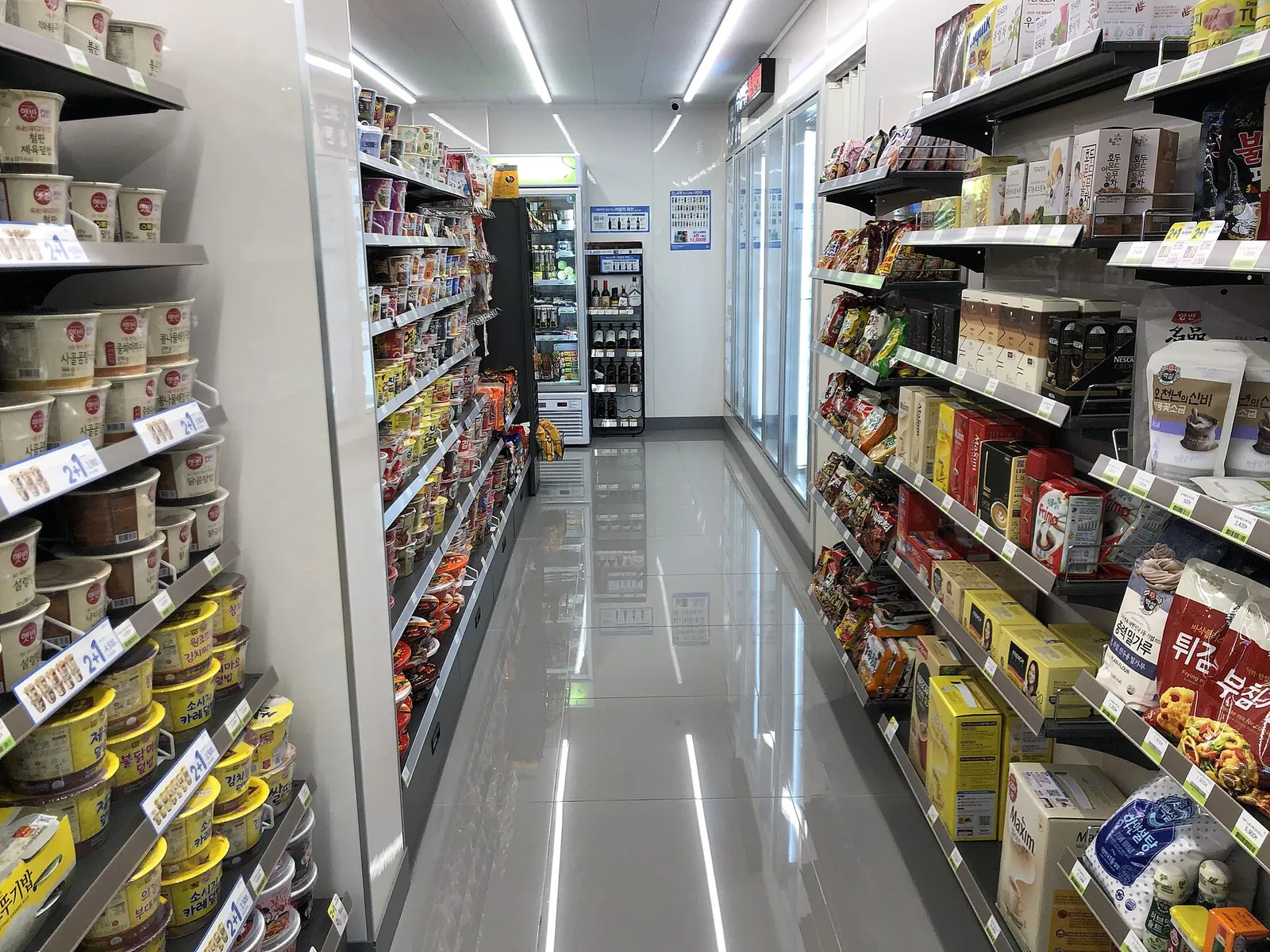
Watch the small colored tags on the shelf edge. 1+1 means buy one, get one free. 2+1 means buy two, get a third free. On the day I checked, CU’s site flagged both the Baeksansu bottle and the Hetbahn rice as 2+1. These deals rotate, often monthly, and they are the main way to bring convenience store prices down. The register applies the deal automatically.

Are convenience stores a rip-off? The same-snack test
The fair way to check is to compare identical products. 참가격’s weekly table includes two snacks that CU also sells, same brand and same size:
| Snack | CU | 참가격 weekly average | Difference |
|---|---|---|---|
| Nongshim Saeukkang shrimp crackers, 90g | $1.19 (1,600 won) | $1.09 (1,462 won) | $0.10 (138 won) |
| Orion Pocachip original, 66g | $1.27 (1,700 won) | $1.14 (1,533 won) | $0.12 (167 won) |
Sources: CU’s pages for Saeukkang and Pocachip, and the 참가격 weekly price table.
So yes, you pay a little more, about a dime per bag on these two items. You get a store that is open late and sits on your corner, with hot water and a microwave included. For a visitor buying a few things a day, the premium adds up to pocket change. If you are stocking a kitchen for a week, a supermarket or a large mart will save you more.
Three baskets, added up
Using only the CU prices above:
- Quick breakfast: tuna-mayo triangle (1,200) + big-cup Shin Ramyun (1,600) + banana milk (1,800) = $3.43 (4,600 won).
- Lunch: Today’s 9-Side Table lunchbox (5,900) + Samdasoo water (1,100) = $5.22 (7,000 won).
- Breakfast supplies for a room with a kettle: 6 eggs (4,200) + sliced bread (3,700) + 1 liter of milk (3,200) = $8.27 (11,100 won).
All three, bought on the same day, come to $16.92 (22,700 won). That covers a day of eating, plus groceries for a few more breakfasts. For a splurge dinner by comparison, see Korean fried chicken prices.
Paying, and the transit card on the counter
Convenience stores take foreign credit cards, and the till accepts cash too. They are also where most people buy and top up a T-money (교통카드) transit card. The card goes on the counter, you tell the cashier how much to add, and you pay in cash. If you are arriving by plane, the Incheon Airport to Seoul guide explains where to do that before you board the train.

What I couldn’t verify
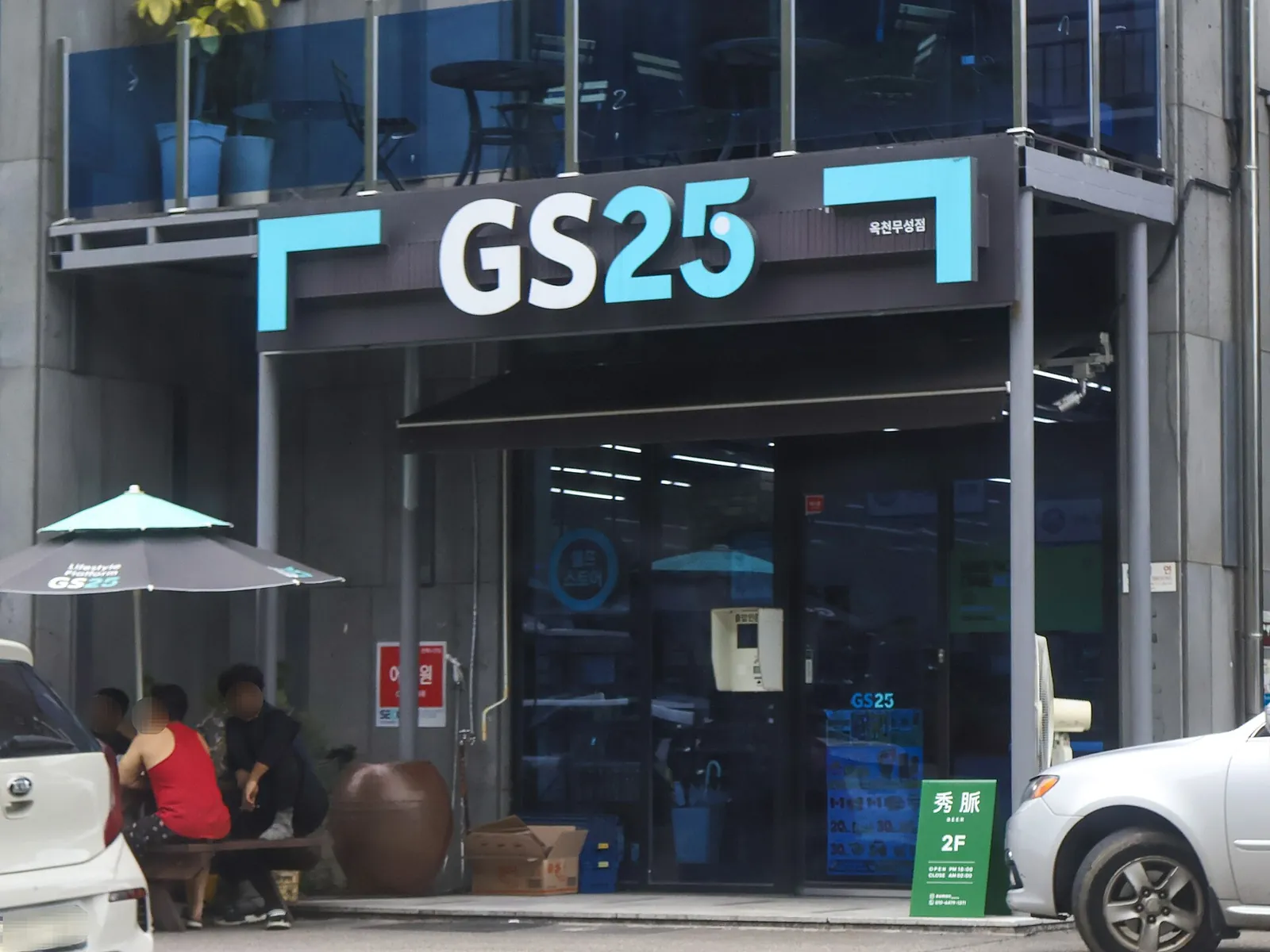
- GS25, 7-Eleven and emart24 prices for the same items. I priced everything at CU because its product pages show prices in plain HTML. GS25’s catalog does not load without JavaScript, so I could not compare it fairly. The other chains will be close but not identical.
- Store-to-store differences. CU’s website lists one price per product. I did not confirm that every branch charges it, especially in airports, train stations and tourist areas.
- How long the 2+1 deals last. CU’s pages show the tag but not an end date.
- Whether 참가격’s average includes convenience stores. The table says it averages actual selling prices with discounts included. It does not say on that page which store types are in the average.
- Supermarket prices for bread and milk. 참가격’s weekly table that day did not include the same loaf or the same milk, so I have no like-for-like comparison for those.
- Coffee, soju and beer. I did not find CU’s in-store brewed coffee, or regular soju and beer, in its online catalog, so they are not in this guide.
If you have a dated receipt from a Korean convenience store that disagrees with any number here, send it. I would rather fix the article than have you plan around a stale price.
Related guides
- Food Prices in Korea: Three Price Tags That Explain Everything: the convenience store floor and ceiling, then the restaurant meal.
- Korean Fried Chicken: What It Actually Costs, and What to Order: the splurge dinner, itemized.
- Incheon Airport to Seoul by train: the cheap train, and where to buy a T-money card.
Common questions
How much do eggs cost in South Korea?
At CU, a convenience store chain, a 10-egg carton was listed at 6,100 won (about $4.55) and a 6-egg pack at 4,200 won (about $3.13) on October 12, 2026. The government price portal 참가격 showed a weekly average of 7,500 won (about $5.59) for a 10-egg carton of one national brand, discounts included.
How much is bread in South Korea?
A 10-piece loaf of Samlip sliced white bread was listed at 3,700 won (about $2.76) on CU's product page on October 12, 2026. Convenience stores carry one or two loaves at most; bakeries and supermarkets have a wider range.
Are convenience stores in Korea more expensive than supermarkets?
Slightly, on identical products. Nongshim Saeukkang shrimp crackers (90g) were 1,600 won at CU against a 1,462 won average on the government price portal 참가격, and Orion Pocachip (66g) was 1,700 won against 1,533 won. That is 138 to 167 won (about $0.10 to $0.12) more per bag, before any 1+1 or 2+1 deal.