Korean Fried Chicken: What It Actually Costs, and What to Order
Real menu prices straight off Kyochon's own site, checked today. What the flavors actually taste like, why the soy garlic is the one that matters, and what a chimaek night really costs.
Prices checked August 20, 2026 · in Seoul, on screen
Every single friend who’s visited me here has asked about Korean fried chicken before they asked about anything else. Not the palaces. Not the DMZ. Chicken.
And almost all of them got it wrong when they planned for it.
They think it’s cheap street food. It isn’t. It’s one of the more expensive casual things you can order in this country, and the price has climbed enough that Koreans complain about it constantly — there’s a running national grievance about chicken crossing the 20,000 won line.
So let’s do this properly. Real prices, what the flavors actually taste like, and what I’d tell you to order — which, at Kyochon, is not the red sauce everyone expects.
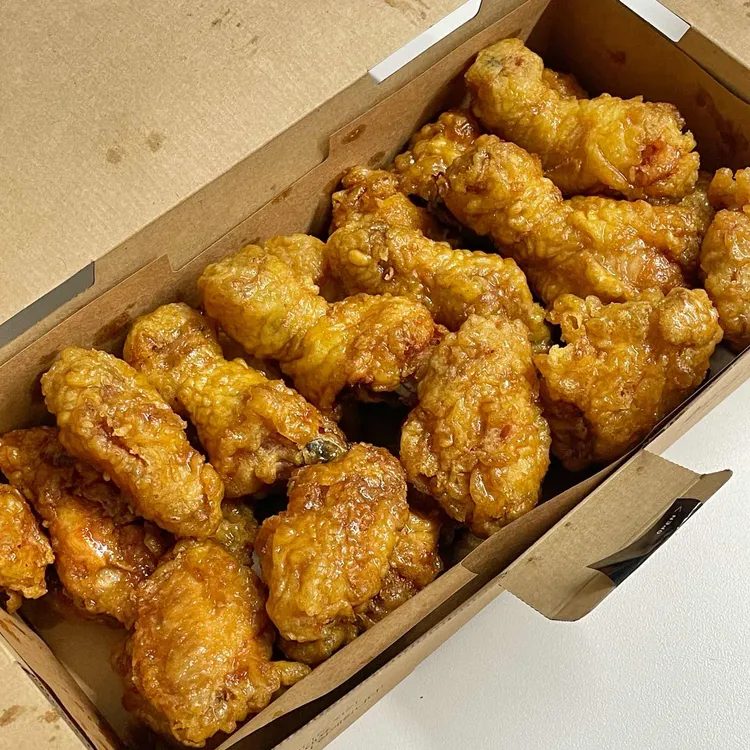
Prices below are Kyochon’s official published prices (권장소비자가격), checked August 20, 2026. Exchange rate used: $1 = 1,391 won. Individual stores can vary slightly, and delivery adds a fee.
What it actually costs
Kyochon is one of the big three chains, and unlike most Korean restaurants it publishes its prices online. Here’s the real spread:
| What you order | Won | USD |
|---|---|---|
| Single wing basket (fried, honey, soy, red) | 7,900 | $5.68 |
| Boneless, small (soy) | 12,000 | $8.63 |
| Boneless, small (red / honey) | 13,000 | $9.35 |
| Whole chicken, soy garlic — the signature | 19,000 | $13.66 |
| Whole chicken, honey | 19,000 | $13.66 |
| Whole chicken, red | 20,000 | $14.38 |
| Half-and-half whole chicken (soy + red) | 20,000 | $14.38 |
| Whole chicken, plain fried | 21,000 | $15.10 |
| Whole chicken, yangnyeom (sweet-spicy) | 22,000 | $15.82 |
| Whole chicken, honey garlic / mala red | 22,000 | $15.82 |
| Wing box, 20 pieces | 23,000 | $16.53 |
The honest summary: budget about 20,000 won — roughly $14–16 — for one whole chicken from a major chain.
Is that a lot? For a country where you can eat a full lunch for 8,000 won, yeah, kind of. That’s the part people don’t expect.
That’s the number to plan with. One bird plus a couple of beers feeds two people comfortably.
Two things that surprise visitors
You don’t tip. Not here, not anywhere in Korea — covered in the taxi guide.
There’s no per-person pricing. You order a bird, not a plate. Two people share one. This is different from Korean BBQ, where “one portion” is genuinely one portion and the bill escalates fast.
Delivery costs extra and it adds up. The menu price is the menu price; the delivery fee sits on top, and it’s gotten steeper. Picking it up yourself is normal and nobody thinks it’s odd.
Ordering pickup in the app knocks 10% off. Kyochon’s own in-store posters advertise it: order through the Kyochon app, collect it yourself, pay 10% less. On a 19,000 won bird that’s about 1,900 won — roughly the price of the beer you were going to have with it. Nobody tells visitors this because, fair enough, visitors don’t install Korean chicken apps.
The flavors, honestly
One thing first, because it changes what you should order: Kyochon is a soy garlic house.
Kyochon spent thirty years getting one sauce right. Order that one.
That’s what they built the brand on back in 1991 and it’s what Koreans associate with the name. If you walk into a Kyochon and order the red sauce, you’re ordering the thing they also happen to make. Nothing wrong with it. It’s just not why anyone comes here.
Soy garlic (간장) — the reason Kyochon exists
Salty-sweet soy glaze, heavy on garlic, brushed on rather than tossed. The skin stays crisp under it instead of going soft, which is the whole trick.
It’s the cheapest whole bird on the menu at 19,000 won ($13.66), which still surprises me — the signature item is the budget option.
This is what I order. It doesn’t fight with beer the way sweet sauce does, and you can eat a whole bird without getting sick of it.
If you order one thing at Kyochon, order this. I will die on this hill.
Honey (허니) — the other one they’re known for
Sweet, mild, sticky. Also 19,000 won, also popular, and the one to get if you’re feeding someone who doesn’t do spice at all.
I find it gets cloying about halfway through a bird. Some people love it — my sister would order this every single time and refuses to hear otherwise.
Fried (후라이드) — the one that tells you if a shop is good
Plain. No sauce. 21,000 won — and yes, it costs more than the soy garlic. I have no explanation for this. Nobody does.
There’s nothing to hide behind, so this is what you order if you want to judge the frying itself. And the frying is the actual point of Korean fried chicken — it’s fried twice, which drives the moisture out of the skin and leaves it thin and glassy instead of thick and craggy like American fried chicken.
That texture difference is what people are actually asking about when they ask how Korean fried chicken is different. It’s not the sauce. It’s the crust.
Yangnyeom (양념) — don’t order it here
Sweet, spicy, sticky, red. Gochujang-based with sugar and garlic. This is the flavor in every photo you’ve ever seen of Korean fried chicken, and it’s the thing most visitors come in wanting.
Order it somewhere else.
I’m not being a snob. Kyochon added a proper yangnyeom to the lineup recently enough that the launch poster is still hanging in stores — 첫출시, “first release.” They are very good at a lot of things. Yangnyeom is not the thing they spent thirty years on.
It’s also 22,000 won, three thousand more than the bird they are famous for.
If yangnyeom is what you came to Korea for, go to a place that built its name on it. Cheogajip (처갓집) is where I’d send you — that’s the real thing. Here’s that post.
Mala red (마라레드) — the newer, hotter one
Numbing Sichuan-style heat layered on the red sauce, riding the mala trend that’s been everywhere here for a few years now. 22,000 won.
This one will get you if you’re not ready. Your mouth goes slightly numb and stays that way. Some people chase that feeling. You’ll know within two pieces which camp you’re in.
Half-and-half (반반) — worth it, but pick the right halves
Two flavors on one bird for roughly the price of one. Soy + red is 20,000 won, a thousand more than plain soy garlic.
The useful version here is soy garlic + honey garlic, or soy + plain fried. You get range without spending your one Kyochon visit on the sauce they’re weakest at.
Chimaek: the thing you’re actually there for
치맥 = 치킨(chicken) + 맥주(maekju, beer). It’s not a marketing phrase, it’s just what people do.
The combination is genuinely load-bearing in Korean social life — after work, during a baseball game, on a picnic mat by the Han River in summer. If you do one “Korean” thing on your trip, this is a better pick than most of what’s on the standard itinerary.
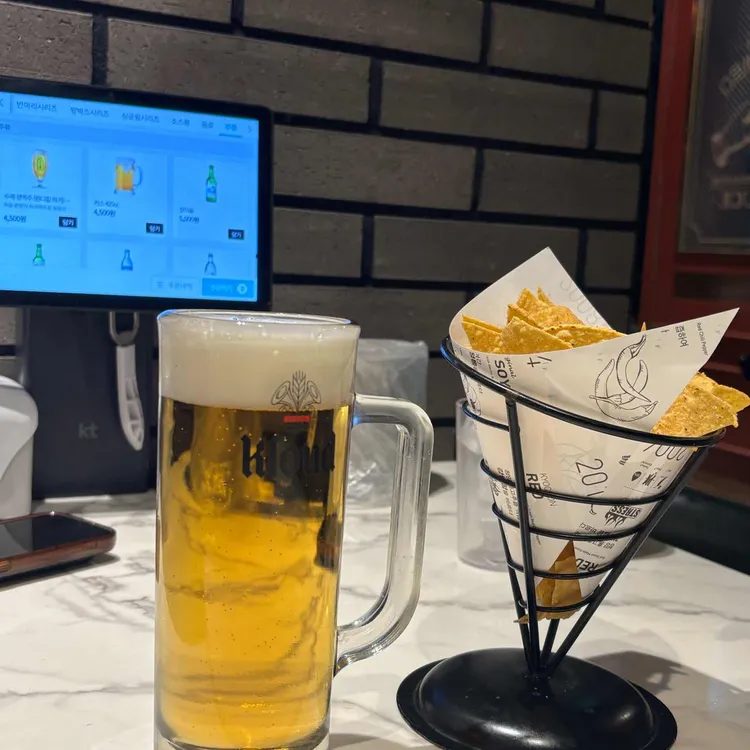
Here’s what the drinks actually cost, read straight off that tablet — a Kyochon 1991 in Jongno, August 2026:
| Drink | Won | USD |
|---|---|---|
| Craft draft beer | 4,500 | $3.23 |
| Cass draft, 425cc | 4,500 | $3.23 |
| Soju, bottle | 5,000 | $3.59 |
So the whole thing, for two people: one half-and-half chicken at 20,000 plus two beers at 4,500 each comes to 29,000 won — about $21, or $10.50 a head.
That’s the actual price of the experience everyone tells you to have here. Twenty-one dollars. For two people. Including the beer.
Go do it.
What I’d tell you to order
If you were standing next to me looking at a menu:
- At Kyochon, first time: soy garlic, whole bird, 19,000 won. Order what they’re known for.
- You want two flavors: half-and-half — soy garlic + honey garlic. Save the red sauce for a shop that specializes in it.
- You want to judge the frying: plain fried. Nothing to hide behind.
- You’re drinking: soy garlic, again. Sweet sauce and beer fight each other.
- You want heat: mala red, and don’t say I didn’t warn you.
- Two of you: one whole bird is enough. Don’t order two.
Where to go in Seoul
Being straight with you: I’m not going to hand you a ranked list of shops I haven’t systematically compared. Every Korean has strong opinions here and most “best of” lists you’ll find are recycled from each other.
What I’ll tell you instead is how to not go wrong:
- The big chains are genuinely good. Kyochon, BHC, BBQ — this isn’t a case where the famous places are tourist traps. Koreans eat these constantly.
- Neighborhood shops are often better and cheaper, but the menu will be Korean-only. Point at 후라이드 and you’ll be fine.
- Skip anything with an English sandwich board outside a tourist strip. Same as anywhere.
What I couldn’t verify
- BHC and BBQ prices — neither publishes them online, and I’m not going to quote numbers I didn’t see. Everything above is Kyochon.
- Independent neighborhood shops — prices vary too much to give you one number honestly. Generally cheaper than the chains.
- Delivery fees — they change by distance, platform, and time of day.
- Menu-price vs delivery-price — the figures above are Kyochon’s published in-store prices. Delivery apps often run higher for the same item. I haven’t systematically compared the two.
All photos on this page are mine, taken in Seoul.
If you’ve got a current menu photo that contradicts anything here, send it and I’ll update. Genuinely — I’d rather be corrected than have someone plan around a stale number.
Next in this series
Cheogajip (처갓집) — the yangnyeom I’d actually send you to. Kyochon owns soy garlic; Cheogajip owns the red sauce — and there’s a catch with their prices that’s worth knowing before you go looking.
Food prices in Korea: three price tags that explain everything. Where a chicken order sits in a normal day of eating, from the convenience store up.
Common questions
How much does Korean fried chicken cost in Korea?
A whole chicken from a major chain runs roughly 19,000–24,000 won, which is about $14–17 at the August 2026 rate. Wings and boneless versions land in the same band. The cheap street-corner shops go lower, but chain prices are the number to plan around.
Is Korean fried chicken expensive in Korea?
Compared to most Korean meals, yes — it's one of the pricier casual things you can order, and it's gone up noticeably in recent years. Compared to a night out in North America, it's still reasonable, especially since one bird plus beer feeds two people.
What is yangnyeom chicken?
Fried chicken tossed in a sweet-spicy red sauce, gochujang-based with sugar and garlic. It is the flavor most people picture when they think of Korean fried chicken. Worth knowing: not every chain is good at it. Kyochon is a soy garlic house and only added a proper yangnyeom recently — for the real version, go to a shop that built its name on it, like Cheogajip.
What should I order at Kyochon?
Soy garlic (간장). It is what the brand was built on in 1991, it is the cheapest whole bird on the menu at 19,000 won, and it holds up better across a whole chicken than the sweet sauces. If you also want the famous red sauce, half-and-half is only a thousand won more.