Seoul Night Bus Fares: What Runs After the Last Subway
A Seoul night bus costs $1.87 (2,500 won) on a transit card and runs between about 11 p.m. and 4 a.m. A taxi in the same hours starts at $5.02 (6,700 won), because of a 40% late-night surcharge.
Prices checked November 2, 2026 · in Seoul, on screen
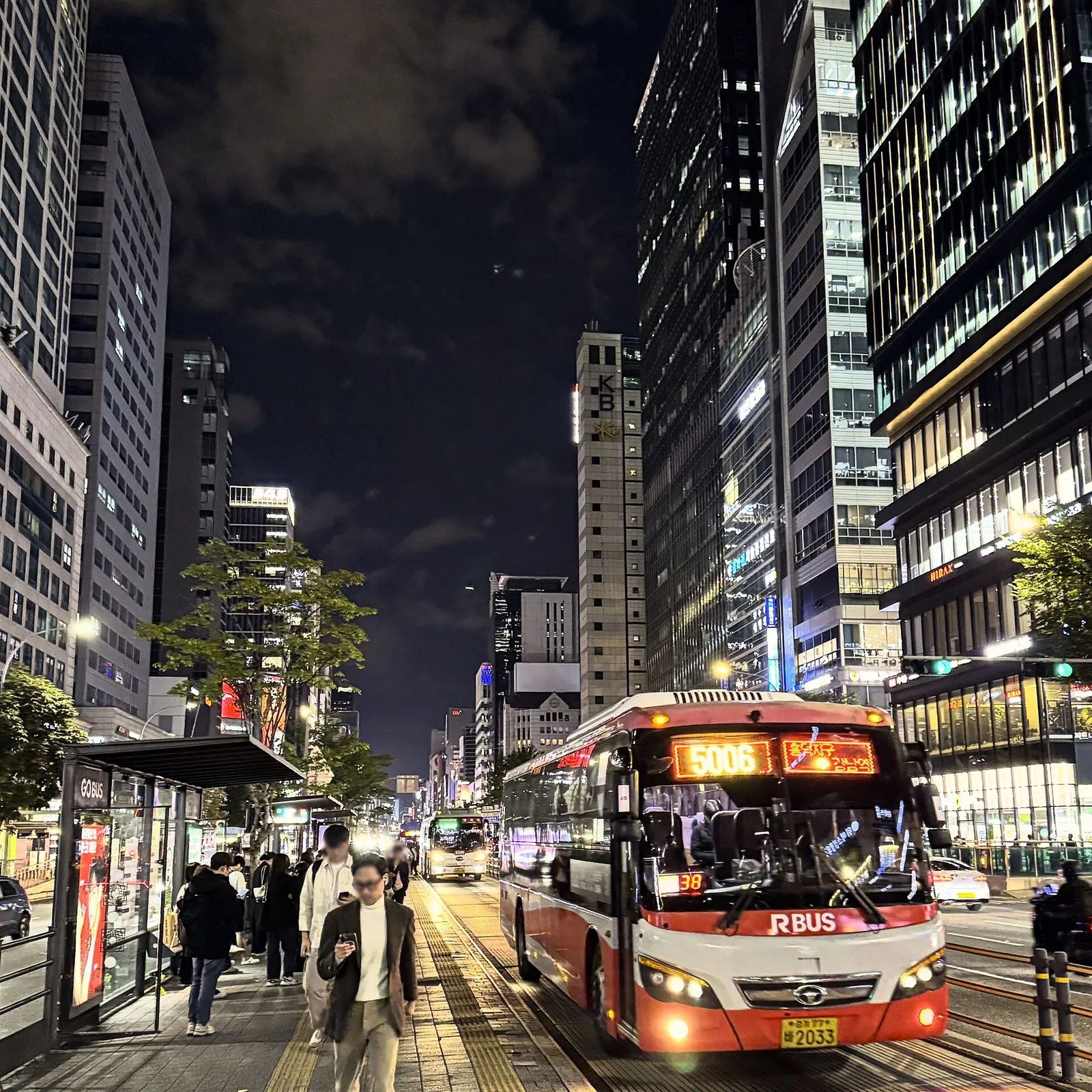
A Seoul night bus costs $1.87 (2,500 won) with a transit card. That is the city’s published fare for the 14 late-night routes, called 올빼미버스 (owl buses). Their route numbers start with N, and they run between about 11 p.m. and 4 a.m. A regular taxi at midnight starts at $5.02 (6,700 won), against $3.59 (4,800 won) in the daytime. Between 11 p.m. and 2 a.m., every part of the meter runs 40% higher.
I live in Seoul, and the late-night question comes up with every visiting friend. The subway closes around 1 a.m. on weekdays, earlier on weekends. Then you choose between a cheap bus that may come only every half hour and a taxi that costs several times as much. This guide gives you the numbers for both.
Checked online on November 2, 2026 (Checked: 2026-11-02). The night bus fare and route list come from the Seoul city government’s night bus page. Taxi fares come from the city’s taxi fare page, and transfer rules from its transit fare page. Subway fares come from Seoul Metro’s fare page. This is a guide to published prices checked on screen, not a ride log or a receipt. Dollar figures use $1 = 1,335.27 won (ECB reference rate for October 30, 2026, via Frankfurter). They are approximate conversions, not a card or cash-exchange quote.

The short version
| After the last train | Adult fare | In dollars | Catch |
|---|---|---|---|
| Night bus (N route), transit card | 2,500 won | $1.87 | 14 routes, a bus every 10–40 minutes |
| Regular taxi, base fare 10–11 p.m. and 2–4 a.m. | 5,800 won | $4.34 | Meter runs 20% higher |
| Regular taxi, base fare 11 p.m.–2 a.m. | 6,700 won | $5.02 | Meter runs 40% higher |
| Deluxe or large taxi, base fare 10 p.m.–4 a.m. | 8,400 won | $6.29 | Meter runs 20% higher |
The base fare is only the first 1.6 km of a regular taxi ride. A real ride across the city costs much more, and I work out an example below.
Seoul subway hours: when the last train actually goes
The rule the city set in 2022 is simple to state. On weekdays, Seoul subway trains run until the last one reaches the end of its line at about 1 a.m. The city’s announcement covered Seoul Metro’s lines 1 to 8, Line 9, and the Ui-Sinseol and Sillim light rail lines. Saturdays, Sundays and public holidays are excluded, so service ends earlier on those days.
That 1 a.m. figure is the time trains arrive at the terminus. It is not when the last train leaves your station. If you are in the middle of a line, the last train through can come well before 1 a.m. If you need a transfer, the connecting line’s last train may already be gone.
Here is how I’d plan it:
- Check the last train before you go out, not at 12:40. Naver Map and Kakao Map both show it for each station. The station’s own timetable boards show it too.
- On a Friday you get the weekday schedule. On Saturday and Sunday nights you don’t.
- Count the transfer. The last direct train is often later than the last train that makes your connection.
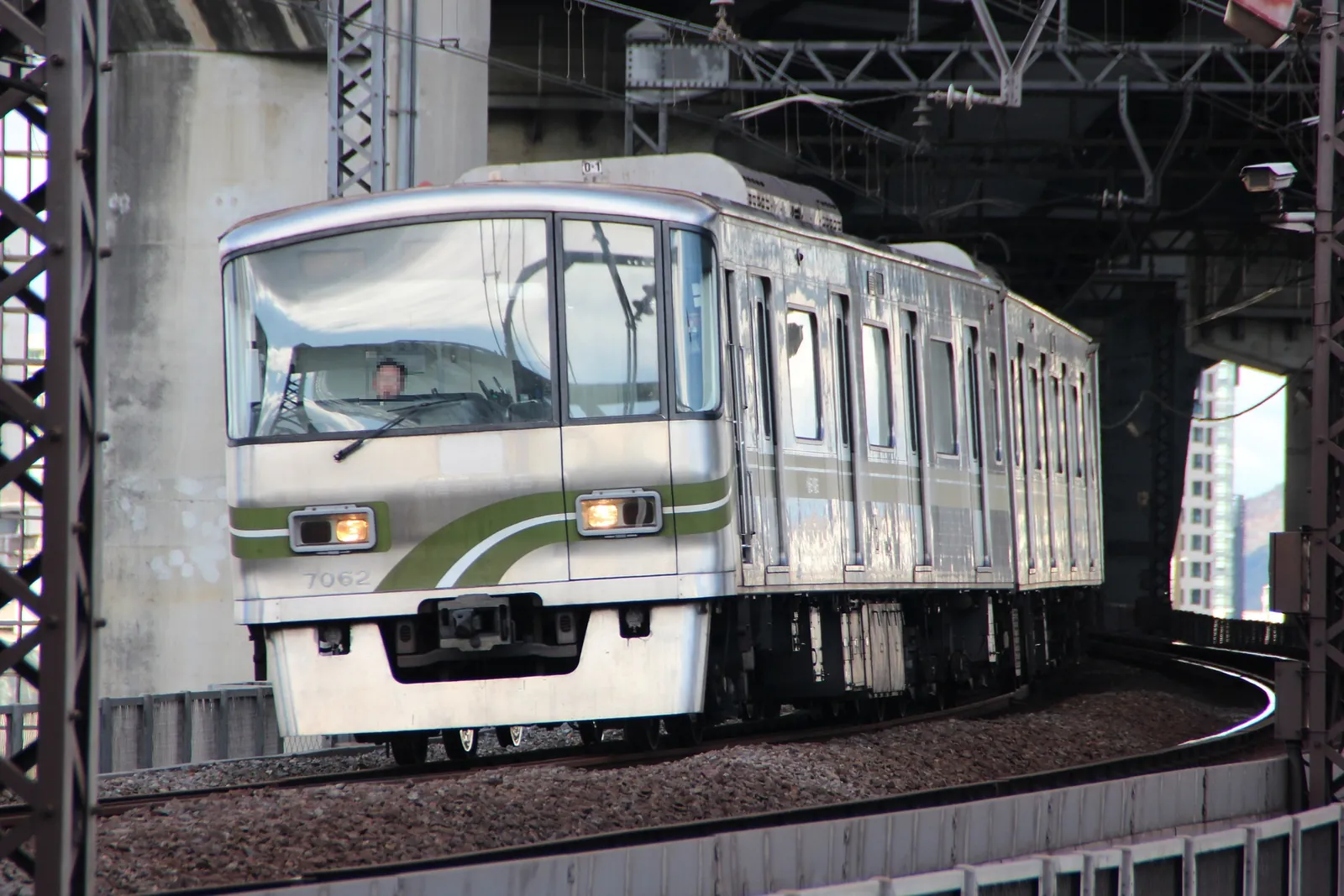

For comparison, a daytime subway ride costs $1.16 (1,550 won) for the first 10 km on a transit card. After that you pay 100 won more for every 5 km, per Seoul Metro’s fare table. A single-journey ticket costs 100 won more than the card fare. So the night bus is about 950 won ($0.71) more than a short subway ride. It is still the cheapest way home after midnight by a wide margin.
Seoul night bus fares and routes
The night buses are regular Seoul city buses that run only at night. The city’s night bus page, last updated in March 2026, lists 14 routes and 140 buses. It gives the service hours as 23:00 to 06:00 and the fare as 2,500 won with a card.
Each route runs between two endpoints. These are the city’s own figures:
| Route | Endpoints | Buses every | First and last departure |
|---|---|---|---|
| N13 | Sanggye-dong – Jangji-dong | 20–30 min | 23:30–03:40 |
| N15 | Ui-dong – Sadang Station | 15–30 min | 23:30–03:30 |
| N16 | Dobongsan – Onsu-dong | 20–30 min | 23:50–03:45 |
| N26 | Banghwa-dong – Sinnae-dong | 20–25 min | 00:00–03:25 |
| N30 | Gangil-dong – Seoul Station | 30–35 min | 23:10–03:50 |
| N31 | Gangil-dong – Jeongneung | 35–40 min | 23:30–03:50 |
| N37 | Jangji-dong – Jingwan-dong | 25–30 min | 00:00–03:10 |
| N51 | Siheung-dong – Hagye-dong | 30 min | 23:40–03:45 |
| N61 | Sinjeong-dong – Sanggye-dong | 10–30 min | 23:40–04:10 |
| N62 | Sinjeong-dong – Myeonmok-dong | 15–20 min | 23:40–03:10 |
| N64 | Gaehwa-dong – Yeomgok-dong | 30–35 min | 23:40–03:15 |
| N72 | Saeksaek – Sinnae-dong | 30–40 min | 23:30–03:45 |
| N73 | Gusan-dong – Jangji-dong | 35 min | 23:30–03:35 |
| N75 | Jingwan-dong – Sillim-dong | 25–30 min | 23:30–03:50 |
Those endpoints are mostly residential districts on the edge of the city. The useful part is the middle. Most routes are 70 to 90 km long, and they cross the center to get from one edge to the other. The city’s page doesn’t list every stop. To see whether a route passes your hotel, type your destination into Naver Map or Kakao Map after 11 p.m. Both apps include N buses in their late-night route suggestions.
What the timetable means in practice
You will wait. The busiest route, N61, comes every 10 to 30 minutes. Several others come every 30 to 40. Miss one and the next can be half an hour away. Live arrival times show in the map apps and on the screens at most stops.
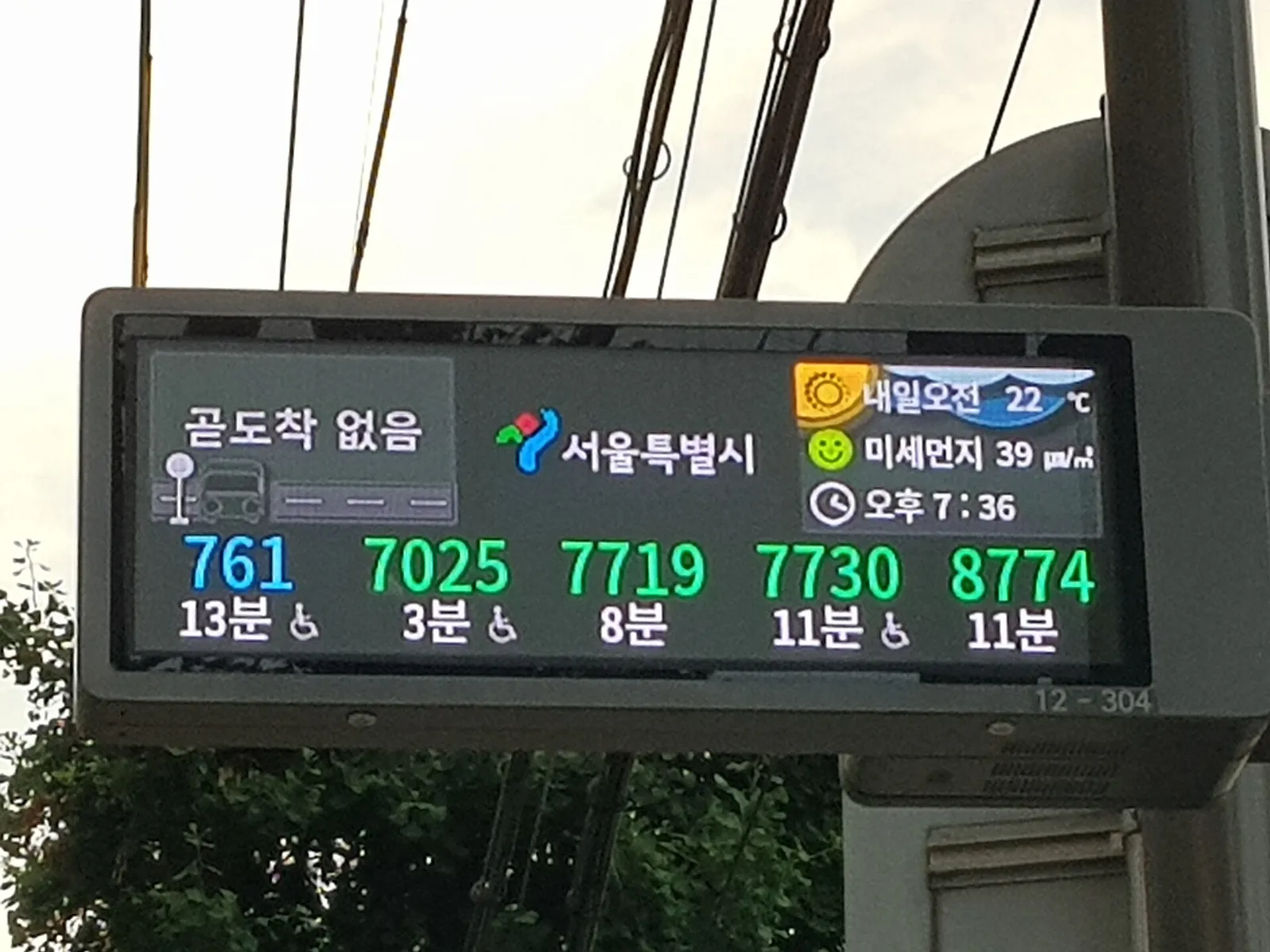

There is a gap before dawn. The last departures listed by the city fall between 03:10 and 04:10. If you are out past about 4 a.m., the N buses may be done before the first trains start. That window is where a taxi is the only option.
Pay with a T-money card (교통카드). The 2,500 won figure is the card fare. I couldn’t find the cash fare on the city’s page. A transit card avoids the question.
Transfers still work at night
Seoul’s transfer discount doesn’t switch off at night; it gets longer. Normally you have 30 minutes after tapping off one vehicle to board the next one at a discount. Between 9 p.m. and 7 a.m., the city’s fare rules stretch that to 60 minutes.
When you combine vehicles, you pay the higher base fare of the ones you used, and then 100 won for every extra 5 km past 10 km. Take a subway train at 11:30 p.m. and switch to an N bus within the hour, and you pay roughly the night bus fare plus any distance charge. You don’t pay two full fares. Tap your card when you get off, or the system can’t see the transfer.
The late-night taxi surcharge, in numbers
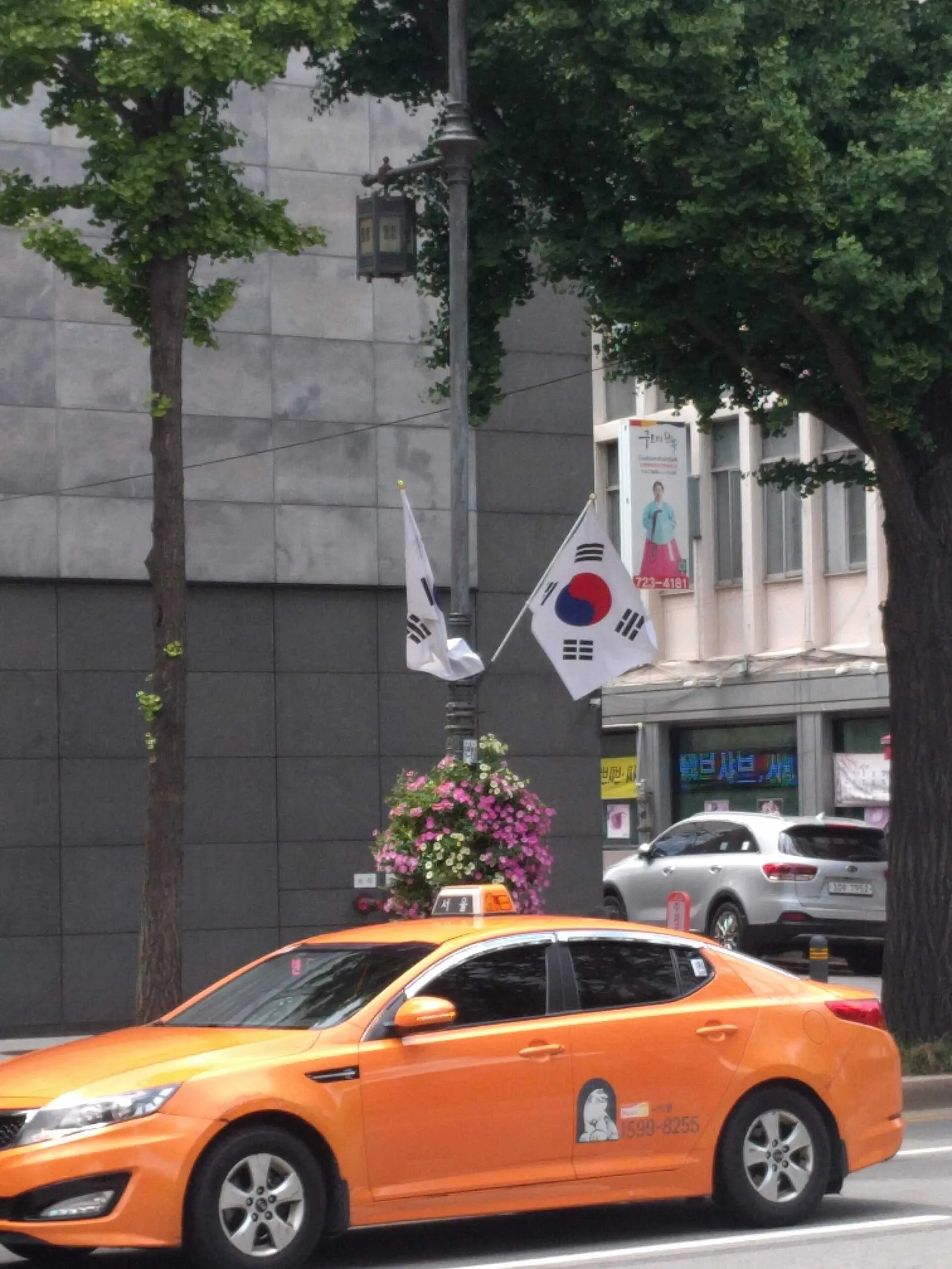
Seoul’s regular taxis (중형택시) charge more at night in two steps. The city’s taxi fare page sets them out:
| Regular taxi | Base fare (first 1.6 km) | Distance charge | Time charge (in slow traffic) |
|---|---|---|---|
| Daytime, 4 a.m.–10 p.m. | 4,800 won ($3.59) | 100 won per 131 m | 100 won per 30 sec |
| 10–11 p.m. and 2–4 a.m. (+20%) | 5,800 won ($4.34) | 120 won per 131 m | 120 won per 30 sec |
| 11 p.m.–2 a.m. (+40%) | 6,700 won ($5.02) | 140 won per 131 m | 140 won per 30 sec |
Two more rules matter. Leave Seoul’s city limits and a 20% out-of-city surcharge applies. Stacked on the night surcharge, the total can reach 60%. And the final fare is rounded to the nearest 100 won.

A worked example: 10 km at three times of night
Here is the distance part of the meter for a 10 km ride. That is a fairly ordinary cross-town trip in Seoul. I’ve used the city’s rates and left out the time charge, which kicks in when the taxi drops below about 15.7 km/h. These figures are before that rounding. Treat them as the floor, not the fare.
| Regular taxi, 10 km, distance only | Won | Dollars |
|---|---|---|
| Daytime | 11,200 won | $8.39 |
| 10–11 p.m. or 2–4 a.m. | 13,480 won | $10.10 |
| 11 p.m.–2 a.m. | 15,660 won | $11.73 |
The same ride costs 4,460 won ($3.34) more at midnight than at noon. Against the night bus, it is 15,660 won versus 2,500. For one person, that’s a big gap. For four people splitting the taxi, it’s 3,915 won ($2.93) each, close to the bus fare and with no waiting.
Should you hail a deluxe taxi instead?
Black deluxe taxis (모범택시) and large taxis cost more by day. Their base fare is 7,000 won ($5.24) for the first 3 km. But their night surcharge is a flat 20% from 10 p.m. to 4 a.m., not 40%. Their night base fare is 8,400 won ($6.29).
On the same 10 km ride, the distance part comes to about 19,440 won ($14.56) at night. That is still more than a regular taxi’s 15,660 won. The gap is smaller than in the daytime, though. When regular taxis are hard to find at 1 a.m., a deluxe taxi is a smaller jump in price than it looks.
For booking through Kakao T, avoiding overcharges and the airport run, see the Seoul taxi guide.
Which one to pick
- Alone, going somewhere an N route reaches: the night bus. Check the map app first, and be ready to wait up to half an hour.
- Two to four people, or a long transfer at the end: a taxi. The 40% surcharge hurts less when you split it.
- Before 11 p.m. or after 2 a.m.: if you’re taking a taxi anyway, these hours carry 20%, not 40%. Leaving at 10:50 instead of 11:10 lowers the meter rate.
- Out past about 4 a.m.: taxi, or wait for the first train. Trains before 6:30 a.m. get a 20% early-bird discount on the base fare with a transit card, per Seoul Metro.
- Landing at Incheon late at night: that is a different problem with different buses. See Incheon Airport to Seoul and the airport limousine bus guide.
What I couldn’t verify
- Night bus fares for children, teenagers and cash. The city’s night bus page gives only the adult card fare of 2,500 won. Other websites list youth, child and cash fares, but I couldn’t find an official page showing them, so I’ve left them out.
- Whether the 1 a.m. weekday subway schedule still holds. The city restored it in 2022. Some Korean news reports have said the city was considering moving it 30 minutes earlier. I didn’t find an official notice of a change, so check your station’s last train on the day.
- Exact weekend last trains. The city’s rule says weekends and holidays are excluded from the 1 a.m. schedule. It doesn’t give one closing time, because each line and station differs.
- Every stop on every N route. The city’s page lists endpoints, not stops. Use a map app for that.
- What a real taxi ride costs. My 10 km examples leave out the time charge in traffic, so actual fares will be higher.
If you’ve taken an N bus or a late taxi recently and kept the fare, send it to me. I’d rather show a real number than my arithmetic.
Related guides
- Seoul taxis: what the ride should cost: daytime rates, the Kakao T app, and the common ways visitors get overcharged.
- Incheon Airport to Seoul: the airport train, the transfer most guides get wrong, and when a taxi makes sense.
- Gimpo Airport to Seoul: AREX, Line 5, Line 9 or a taxi, priced.
- The costs nobody budgets: the smaller charges that add up on a trip to Korea.
Common questions
How much is the night bus in Seoul?
An adult pays 2,500 won (about $1.87) with a transit card, according to the Seoul city government's night bus page checked November 2, 2026. The city runs 14 night routes, numbered with an N, and their first and last departures fall between 23:10 and 04:10. Buses come every 10 to 40 minutes, depending on the route.
What time does the Seoul subway stop running?
On weekdays, the city's rule is that the last trains reach the end of their line at about 1 a.m. Weekends and public holidays are excluded from that late schedule. The last train from your station leaves before that, so check the station board or a map app. After it goes, your options are the N buses or a taxi.
How much more does a Seoul taxi cost late at night?
A regular taxi adds 20% from 10 to 11 p.m. and from 2 to 4 a.m., and 40% from 11 p.m. to 2 a.m. The base fare rises from 4,800 won (about $3.59) in the daytime to 5,800 won ($4.34) and then 6,700 won ($5.02). The per-distance and per-time charges rise by the same steps.